Built on practical experience. A shared eye for the whole picture.
A survey tells a story about work on site. We want to make that story understandable. That is why Ron and his sons Brad and Dave are building Survey Control together, bringing site experience, design and surveying to the same table.
The Pors family stands behind Survey Control: Ron and his sons Brad and Dave. We set the direction and each retain control within our own profession.
It began with curiosity and a familiar question from practical work: could survey information be shared more clearly and easily? Ron and his twin sons Brad and Dave each approach that question through their own profession. What connects us is the wish to bring work on site and work in the office closer together.
Ron Pors
Practical experience and the whole picture
Ron brings more than thirty years of experience in cables and pipelines, site operations, civil engineering works, earthworks and service connections. He keeps the work sequence and the whole picture in view. His question stays practical: what does someone on site need to know, check and pass on?
Brad Pors
Design and readability
Brad is a graphic designer and art director. He creates and reviews the visuals, layout and readability. The aim is not more decoration, but a clear presentation that helps people see what matters.
Dave Pors
Survey data and field work
Dave is a surveyor. He checks how survey data is processed and tests the application in the field, bringing everyday surveying practice into the development of Survey Control.
Why we are building this
Less figuring things out. More understanding.
From earthworks crews and site managers to supervisors and clients, everyone should be able to understand what the surveyor has recorded. We want to make the journey from survey file to clear document simpler, for beginners and experienced users alike. Not technology for its own sake, but information people can work with.
01
What was measured?
02
Where was it measured?
03
How was it measured?
04
What does it mean for the work?
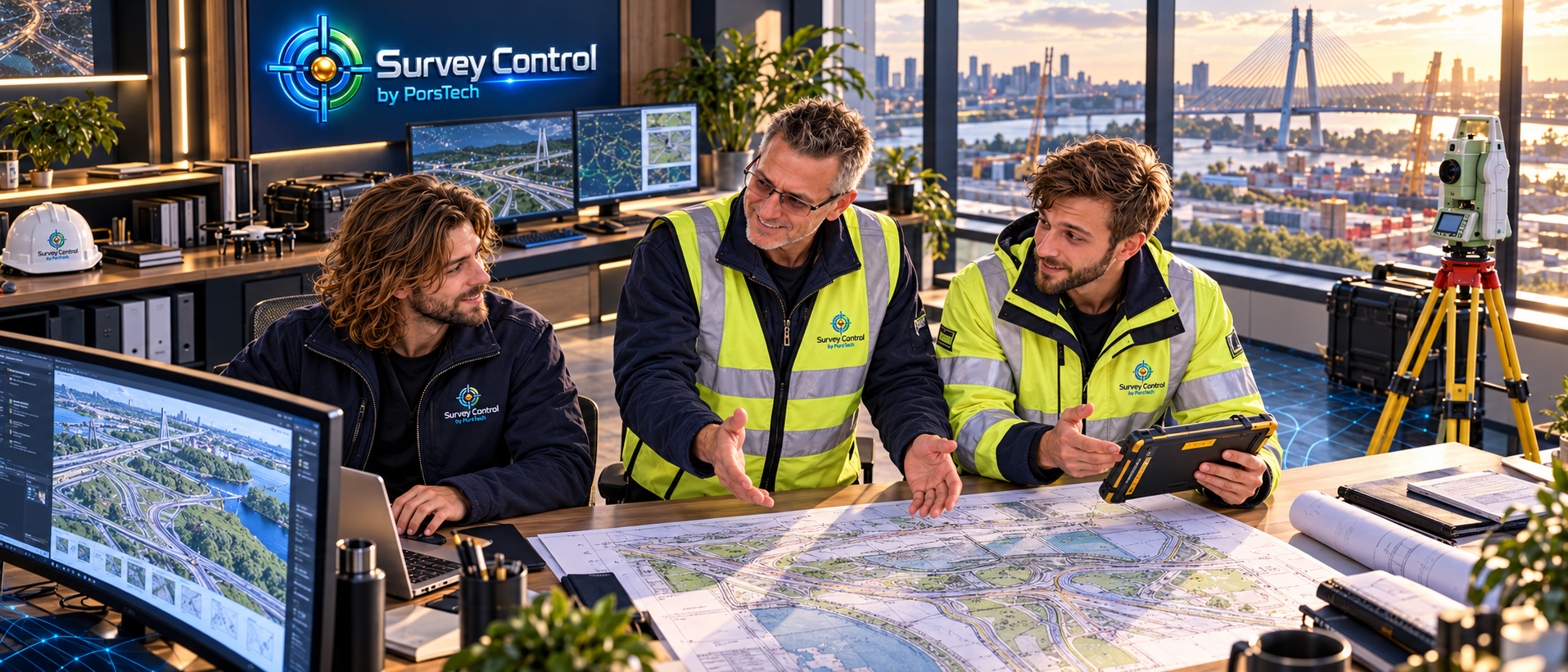
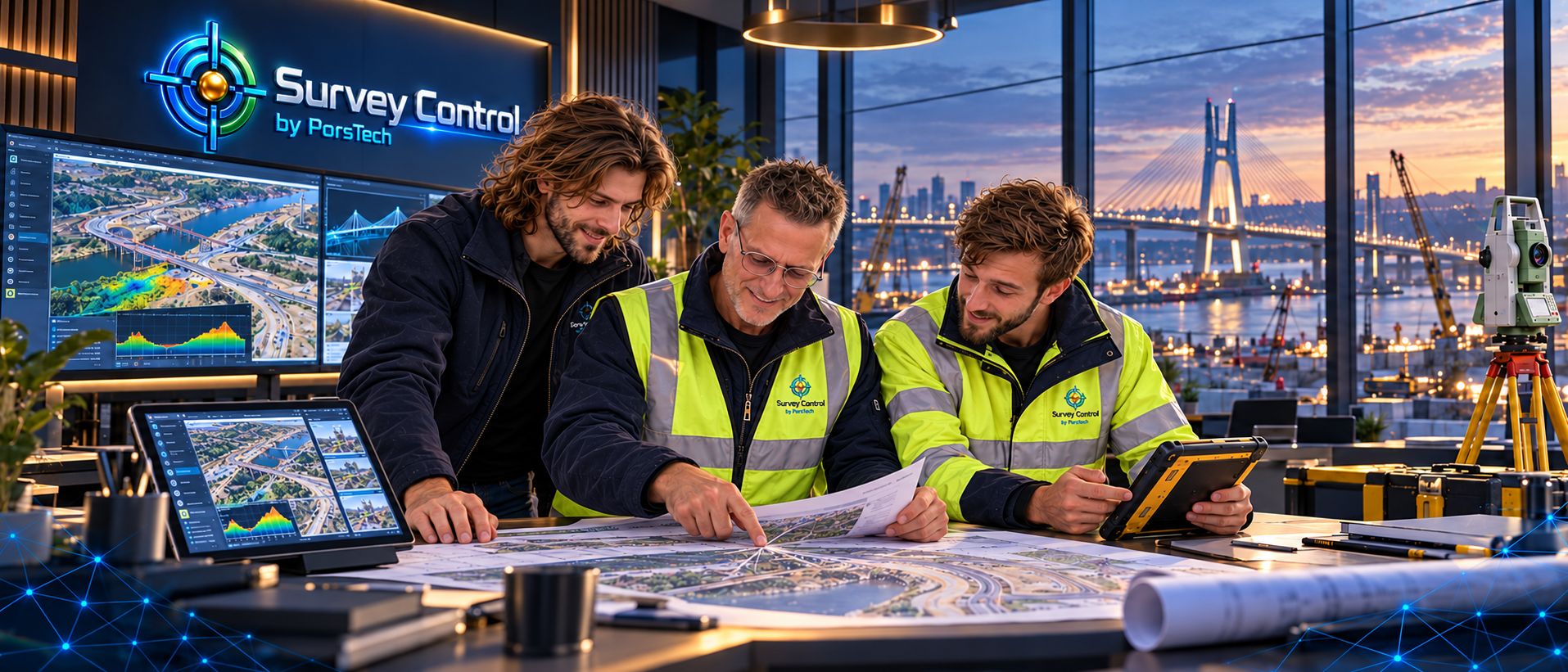
About the images
The work images of Ron, Brad and Dave Pors were created with AI using supplied reference photographs. They illustrate collaboration and are not photographs of an actual project. The explanatory drawings are schematic, not survey results.